2002–2004, United Kingdom
Banknotes stamped with the word SAMPLE and returned to circulation through everyday transactions.
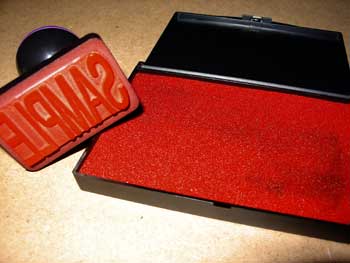
Using red ink and a rubber stamp engraved with the word ‘SAMPLE’ in capitals, banknotes were marked. Although marking the note in such a way does not invalidate it, care was taken not to deface the Royal Effigy, which is illegal.
Use of the word SAMPLE references commercial products sent as examples to resellers, evaluators, or the media, where actual products are marked in such a way as to prevent sale, and therefore profit from a ‘free’ copy of a product. The word SAMPLE is fundamentally different from using the word SPECIMEN2, which is always present on reproductions of banknotes1 to make it impossible to attempt to use them as real currency.
Marked notes were then used as normal money for the purchase (or attempted purchase) of goods and services. Some cashiers noticed the stamp and challenged its presence: some minded, some did not. Other cashiers did not notice, meaning the stamp was probably spotted at a later time — either when offered to another customer as change or before or when they reached the bank — all times when they would be challenged by the stamp.
Marked notes were also used in automated ticket machines.
Notes
Historical notes from the original artwork text, retained for reference. They describe the legal and banknote reproduction context of the project and are not current legal guidance.
1. Under section 18(1) of the Forgery and Counterfeiting Act 1981 it is a criminal offence for any person, without the prior consent in writing of the Bank of England, to reproduce on any substance whatsoever, and whether or not on the correct scale, any Bank of England banknote or any part of a Bank of England banknote. The Bank of England also owns the copyright in its banknotes.
2. The Bank of England requires permission to be sought before reproduction of banknotes from The Note Reproductions Officer. Any reproduction of banknotes “must also include the word SPECIMEN twice in solid black capital letters. Once from the bottom left corner to the top centre and again from the bottom centre to the top right corner of the banknote”.